Make Femininity Fashionable Again
Soul Purpose produced an important blog last year, and I have finally managed to collect my thoughts on some of the points she made.

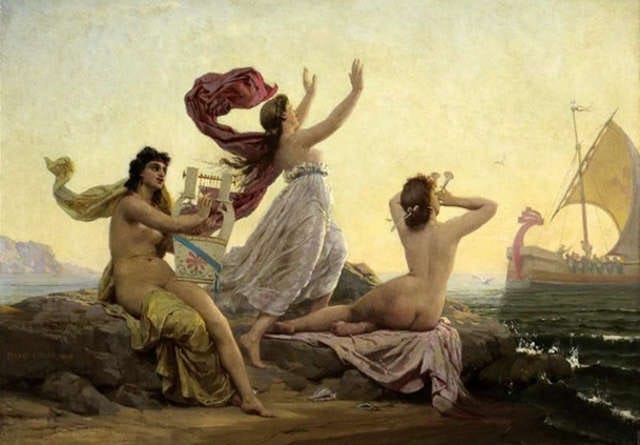
Odysseus and the Sirens - Marie-François Firmin-Girard
What follows is very speculative. And I trust Soul Purpose will forgive me for reproducing her photograph.
Before Christmas, I was pondering the way forward for our society, the antidote to the current unsustainable and ruinous political projects, the broken governance and the general sense of an accelerating decline, even decay.
But it can all get a little self-absorbed, even pretentious, on my part. And I was struck by how, however interesting the various political and social issues are, they in no way feed the soul, as, say, working for others, or serving the church can.
Nor does political debate, in which we invariably talk past one another, enhance or invigorate one’s life in the same way family, art, beauty, literature, friendships, or even a walk in the countryside may.
I am also deeply suspicious of the repeated claims of the inevitability of a calamitous civil war that permeates the current right-wing messaging. A key tool of the adversary is to so convince us of the inevitability of his success that we become unwilling advocates of his machinations. Commentators, I used to think, possessed more insight than I; increasingly, they seek to convince me that all is lost. I think they are losing the plot and being lured onto the rocks by digital Sirens.
But this is the tip of the iceberg; we are awash with harmful, alarming and deceptive narratives that eat away at social harmony and the moral and spiritual fabric of our nation. They sap our courage and our ability to identify the real problems we face, and, most importantly, to take action.
I know the starting point in any national renewal project has to be a return to the living gospel, and then working forward from there, rather than trying to “align” the political and spiritual, satisfying neither. But there might be some quick wins; things we knew worked in the past before they were sabotaged.
For the last few years, I have been chanting or singing in my local Orthodox church the innumerable liturgical services and hymns of church tradition, including those that venerate the Holy Theotokos, the ever-virgin Mary. I previously discussed a personal insight I gained as I became more acquainted with the Kassiani Hymn.
I have a growing respect for the difference between women’s and men’s voices as we sing together, and how achieving some complementarity in a choir requires constant adjustment. I will need to write separately about the masculine and feminine revealed in the choir. Suffice it to say, when we occasionally alternate between male and female singers, so much has to change. The breathing, the pitch, the precision and clarity all change when women and men do not sing as one.
In the run-up to Christmas, I was particularly struck by the profound meditations on the incarnation and the Theotokos’s role in the various hymns. I see a profound articulation of the very matrix of our shared reality. That the male and female are entwined.
Kontakion
Tone 3

On this day, the Virgin gives
birth to the Super-essential.
To the Unapproachable,
earth is providing the grotto.
Angels sing and
with the shepherds offer up glory.
Following a star the Magi are still proceeding.
He was born for our salvation,
a newborn Child, the
pre-eternal God.

Oikos
Bethlehem has opened Eden.
Come, let us see.
We have found the hidden delight.
Come, let us receive the things of Paradise
inside the Cave.
There, we shall see an unwatered root
that blossomed forgiveness.
There, we shall find an undug well,
from which David of old desired to drink.
There, the Virgin quenched the thirst
of both Adam and David,
when she gave birth to her baby.
So let us go there now, where
He was born a newborn Child,
the pre-eternal God

The healing and reconstruction of our society will, in part, require the restoration of the Christian sacred, ancestral, and luminous feminine by women indwelt by the holy spirit. It’s hard to talk about femininity without trying to identify what it is and is not. Which, in turn, can lead to a dialectical reduction to abstractions and potentially to idolatry. Being, singing, dancing, and soothing will be much more vital than screaming and rage.

For the Orthodox, one arc of our cosmic narrative is the fall of Eve, the succession of typological feminine figures in scripture - Hannah, Judith, Esther, Bathsheba - and, therefore, in history, culminating in the corrective cooperative exemplary obedience of the Ever Virgin in Christ’s restorative mission.
This specific blog by Soul Purpose was full of fantastic photographs and enthusiasm. It prompted these reflections on the unique roles of tradition and fashion, and on how the contributions of women might figure in a more quintessential recovery of our society.
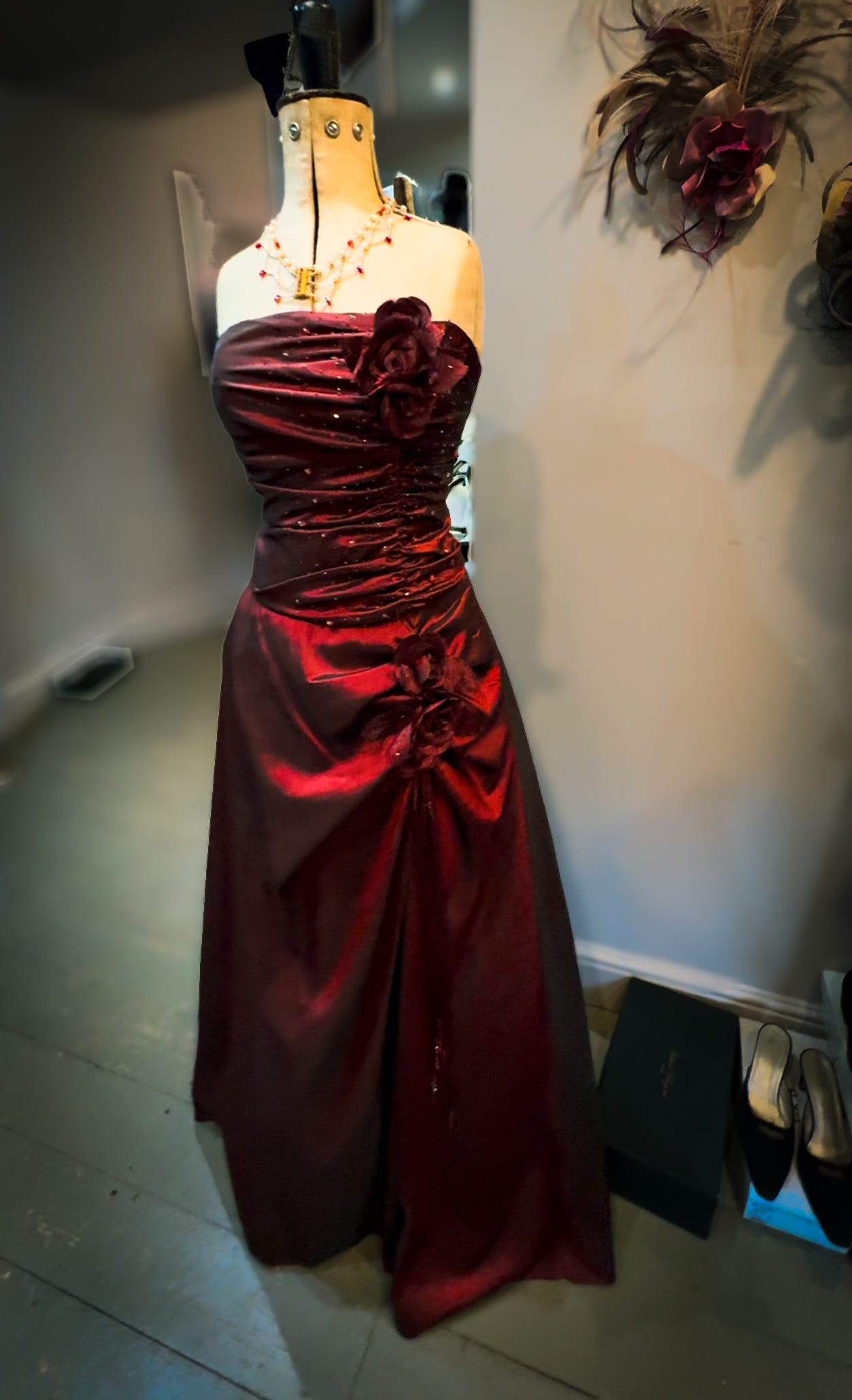
This photograph by Soul Purpose is taken from her SubStack blog. Please take the time to read through it.
Soul Purpose’s blog post revealed her appreciation for fashion, featuring some fantastic antique and luxurious women’s clothes that she modelled and then displayed in shop windows.
She generally knows a lot about a lot of things, and revealed a new skill as a window dresser, along with her love of clothes and couture, which matched her photography skills, making the already beautiful, elegant garments and the window dummies almost come alive.
The joy of clothes and how they feel, their kinesthetics, and how they make you feel when you wear them, often when you are feeling vulnerable, was part of her subject matter. Something deeper was being explained: perhaps a garment can connect a new wearer with the era in which it was produced and even with the person who fashioned it.
The clothes themselves, from the hussar uniform to the ballroom gowns, were all exceptional; like a breathtaking landscape or ancient lane, a great framed painting, a piece of perfect architecture, or a graceful canal. The garments Soul Purpose featured whispered to us, even purred and caressed the women who wear them. They speak of chivalric or wartime rediscovery. But they also explain why women can get lost in the process of shopping for clothes and end up buying little.
This was a different take on fashion from the one I am usually bombarded with in popular culture, high fashion as LGBTQ inversion, indulgence, distortion, size X heroin chic, demonography, etc.
I assume someone has made the evolution of dressmaking and fashion into a way of charting the history of the culture of wider society in various nations’ national dress, and how they, like the nation’s moral fabric and family practices, bridge social classes and draw society together, rather than the class-war-based notions that fashion, elegance, luxury is purely the preserve of the elite and privileged and every where resting on the cannibalising of the noble poor.
What makes life bearable and even joyous must include therapeutic relationships between men and women, whether in marriage, blood kinship, rare friendships, a church parish, a specific community, or even the chaste regard for a muse or mentor.
“And Adam gave names to all cattle, and to the fowl of the air, and to every beast of the field; but for Adam there was not found a help meet for him. And the LORD God caused a deep sleep to fall upon Adam, and he slept: and he took one of his ribs, and closed up the flesh instead thereof; and the rib, which the LORD God had taken from man, made he a woman, and brought her unto the man. And Adam said, This is now bone of my bones, and flesh of my flesh: she shall be called Woman, because she was taken out of Man. Therefore shall a man leave his father and his mother, and shall cleave unto his wife: and they shall be one flesh. And they were both naked, the man and his wife, and were not ashamed.”
Much of what has been taken from us involves the inversion of the feminine: not just the ruinous relegation of motherhood, but also the erasure of its key cooperative role in procreation, in spiritual healing, and in the whole, multifaceted array.
So whilst I am aware of the risk posed by the Sirens (see image at the start of this blog), and indeed that when Adam and Eve fell, the key realisation was their nakedness, which arguably, we are still hiding from in myriad consumerist adornment. There is also a quest for the gracious beautician of the spirit. Whatever the world and indeed Adam and Eve looked like when God declared his creation was good.
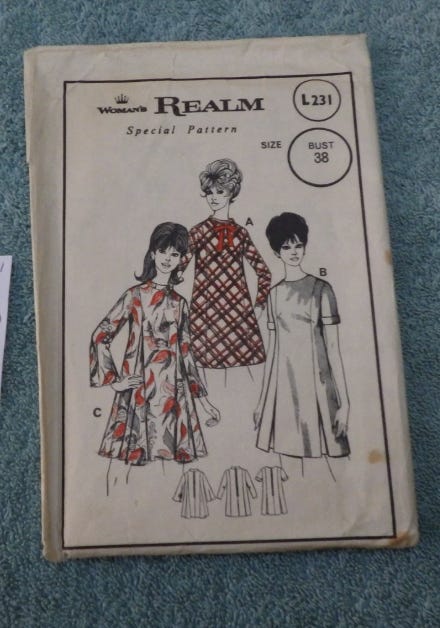
As a young boy, I was aware that most women’s magazines included garment patterns. Back then, a desirable quality in a working-class wife was the ability to mend and make things: to crochet, knit, darn, and fashion the simple or, in some cases, beautiful garments from scratch.
I watched my foster mother and sisters cut out patterns, pin the templates to the selected fabric, then use the pedal-powered sewing machine, and hey presto.
The images of women in old magazines emphasised softness, romance, submission, courtship and romantic love culminating in motherhood. They were alluring, but the attraction was full spectrum; it was simultaneously suggestive but also communal, it came with expectations of courting and parental permission, and an engagement ring and the acquisition of a wedding dress.
Despite a strong artistic temperament, I do not really know much about fashion; many men live for fashion and have an acute sense of style, and are not always gay. However, I have been drawn to the traditional in the last decade, and any period where a three-piece tailored suit with a colour-coded collar and shirt was the norm. I have worn three-piece suits for work, off-the-peg, not that well-fitting, but they invariably elicit positive responses. When paired with a suitable shirt and tie, it exudes professionalism, poise, and agency.
I have vivid memories of the local radio station’s lunchtime call-in shows of the seventies. One debate theme was Should Women Wear the Trousers? Many women and men rang in to say no, both literally and metaphorically, and ventured that the blurring of the sexes and roles, provider-homemaker, was wrong.
But a few defended trousers, saying they were practical and sometimes warmer in colder weather or for physical work, such as gardening; the latter were the minority. Today, such a call-in would be reported as a hate crime. Today, women routinely wear trousers. It’s to do with ease and warmth and so forth, and good designers often come up with breathtaking designs.
But, of late, the tendency for women to wear skin-tight clothing, sometimes gym wear, which shows buttocks or cleavage, sometimes on a voluptuous or slim figure and frequently the opposite, either way leaving nothing to the imagination.
So we also need to recover and embrace some neglected words, such as decorum, elegance, and even prim and proper. Sometimes people go for cheap, baggy comfort because of some underlying demoralisation; what’s the point of making an effort? Men also have to fight against this slothful mode.
In the last decade, I have been to more charity balls. The elegant dresses that women wear are a delight. The formal black-and-white with a dicky bow enhances the men, complements the women, and evens out the masculine competition.
Any woman in a well-fitting ball gown enhances their appearance and potential. If a woman values herself and her adornment, her man will notice and feel compelled to up his ante. It’s the only place aside from a wedding where we see these encounters.
At times, the war between the sexes does illicit resentment and desire to set the record straight with the feminist malcontents. But at the same time, there is a responsibility to protect, nurture, and empathise with those who have experienced real mistreatment.
But overall, On the Settled Questions attempts to highlight unconventional questions. This heartbreaking and courageous Ukrainian woman remains the exemplar of what Christianity stands for: tradition, loyalty to forebears, repentance, courage to speak out, and humility. Feminism seeks to dismiss the notion that women can be sinful, whilst being obsessed with the real and imaginary sins of men. Feminism is also content to play the apologist cowardly. To recover the true feminine, both male and female sinners will have to repent.
But there is no two ways about it, women can be beautiful, and that beauty can be its own innate virtue; this was probably a given. I think I stumbled across something during my reflections on Tarkovsky’s film Nostalgia, in which I noted that the central female character, Eugenia, appeared alienated from her true nature in pursuance of some modernist masculine mode. It’s a hard reread, but here goes:
“Manly smoking is out of fashion in recent Western cinema—one good reason to watch the best of the cinematographic world’s masterpieces. True men of dubious but evolving character, fetched aloft, self-possessed poets, writers, artists, and creators, are found to be intent on their vision. This is now in the face of the neutered, outward framing of consumerism and its false offspring, misandry or the shallow, panicky Trad Wife inducements.
In contrast, the landscapes and horizons where women augment time and participate but do not shape history - repopulate a world where the unique and new have a manly brand. This is what we are missing; this is what we mourn and have half-forgotten.
Women who illumine the otherwise purposeless masculine habitat with their prayers, who decorate the home with fertility, domestic endeavour, singing and generous smiles, gazing up toward the elemental and our one true saviour as they process through an otherwise sterile society—this is preferable to the derivative entanglements of Eugenia’s quest for what is, in fact, masculine estrangement and affirmation.
A holy feminine revival is a vital, oft-overlooked necessity.
Fortunately, the Theotokos will not conform to our modern gaze.”
One of my hobbies is Instagram, and I idle away too much time in the evening browsing what the algorithm throws up. I recently watched an American Protestant woman share what she had learnt by simply setting aside trousers, as if it were a direction from God. Have a quick listen before proceeding.

She noted the difference that exclusively wearing dresses made. There were some positive and appropriate comments from men, though nothing she was wearing was suggestive, short, or revealing. Interesting: she noted it changed the way she walked, her stride, and how she swayed, sat, and moved, and, all in all, made her feel far more feminine.
A few years back, during the lockdowns, I noticed that many women I was working with were managing chronic anxiety. Sometimes, a woman you know who appears exceptionally poised, productive, organised, and capable confides that she is wracked with anxiety. It’s the big issue at the moment as doctors “sign off” many women due to their mental health, who just a few years ago would be expected to carry on working.
More than that, many women are on medication to calm what my foster mother would have referred to as their “nerves”. Scrape beneath the surface of the anxiety, and it is often linked to juggling work and home life, dealing with a succession of problems, often alone or with limited involvement of their partners, friends or extended families.
Once we had families to step in and husbands to provide financial security, and conversely, men had wives to build a home and raise the children, it wasn’t perfect, of course, but it was real, and often a team effort that made life easier, and it was a model for all social classes.
Read The De-moralization of Society: From Victorian Virtues to Modern Values by Gertrude Himmelfarb, and you discover her research in this area, which surprisingly contradicts much of what even first-wave feminism claimed to be the case.
Just one example, the model of the woman managing the home and finances was not just something for the wealthy middle class; when working-class wives and mothers were interviewed, they explained it was the norm that their husbands handed over the intact pay packet and were then allocated pocket money after the household budgeting had been extracted.
A modern war has been declared on womanhood in all its dimensions, and on femininity in particular: humility, gentleness, sweetness, fecundity, and nurturance are cancelled. And the more active creativity and beautification of self and others, that inspires and motivates a man to seek to be virtuous and energetic in securing a woman’s favour and assure her protection, is now replaced by a series of unrequited and unearned welfare and divorce law entitlements, the money sequestered from another woman’s working husband’s paycheck.
But the protagonists are not strictly speaking men. There are fundamental psychological-therapeutic relationships between women and men, mothers and sons, lovers, aunts, sisters, and even colleagues that are essential for a boy to become a man and for him to be able to make sense of the power of feminine attraction and not be broken by female hypergamy.
There are still beautiful, intelligent, talented and creative women, of course, but that is not enough; there are hard-working, devoted, self-sacrificing women, and the returns for them on their endeavours are miserly. There are even some conscious and devoted mothers, a cornerstone of femininity and society itself, who are constantly marginalised.
But there are so many women I know who are exhausted by their pursuance of the ordinance of the pseudo-masculine: financial independence, career, prolonged education with massive debts, perpetual anxieties, hormonal and other ill health; the emphasis on the superiority of ones own opinion when in fact the opinion is plagiarised, and the deprioritisation of marriage as part of a hollow repudiation of any dependencies on men.
Femininity is no longer fashionable and, when it does rear its head, it is often other women who shake their heads. From graceful allure and intense attraction, we have progressed to bestial, vulgar wantonness, where women “experiment” and indulge in unconnected serial coitus.
Increasingly, women have nothing approaching a work-life balance and are trapped in a cul-de-sac of their own, with solitary, even poor, decision-making that has cornered them. The more we use the law to reduce the gender pay gap, the more we are forcing women to remain in the workforce and compete for and reducing the number of overtaxed men of means.
I am among the majority of men who will do anything to please the important women in our lives, but spend much of our time unable to establish gentle reciprocity. Not much is required to motivate a man.
A smile. A wink, a kiss, a hug, an old-fashioned thank you or note.
A smile. A wink, a kiss, a hug, an old-fashioned thank-you or note.
These are the things that have led men to venture out and risk all. To go to war, to work through pain, to sacrifice everything. And not just for anyone’s smile, Jacob spent 14 years of hard labour to secure Rachel as his bride.
True femininity transcends and sometimes redefines sensual beauty; it is often about poise and humility, but also about movement, grace and devotion. Men can be entranced by it, of course. But I should not get carried away, there is something of femininity for its own self as the default setting for most women.
I stumbled upon Bella Freud’s Fashion Neurosis YouTube Channel and realised that women share so much among themselves that they seldom share with their men; and beauty, femininity, and fashion also come with an acknowledgement of vulnerability, loss, and incompleteness. The love of clothes and dressing up, and the emotional complexities that come with it, were also part of what Soul Purpose had been talking about.
I was actually looking for information on Helena Bonham Carter re the Howards End feature film. When the algorithm selected her “session” with Freud. I went on to watch a Nick Cave interview, where he spoke at length about the centrality of his wife in his life. Fortunately, Susie Cave had her own episode, which is here:
Susie Cave and Freud are close friends, but I noticed that in all sessions with Helena Bonham Carter, Kristin Scott Thomas and Trinny Woodall, there was a whole different language and sensibility in relationship fashion, clothes, and adornment.
Indeed, Nick Cave’s passions on the subject were acknowledged as slightly exceptional for a man. Whilst these are not typical women. These are wealthy and successful, attractive and creative, mature women. Models, actors, fashion designers, and gurus immediately connect on a whole other level, with the clue also to be found in the channel’s title. There does seem to be a lifting of the veil on this vital part of women’s worlds, which now, to me, looks like an elephant in the room.
I am not going to summarise their observations; that would be real mansplaining. Most men don’t talk about clothes this way, and certainly not like these women do. In some ways, the comparison might be how half of men converse about cricket or football. Women don’t, in my opinion, talk about these things to their men.
The words that strike fear into most straight men in a relationship are: “Does my bum look big in this?” How on earth do you answer that question? When it comes to women’s shapes, I have long been an equal-opportunity proponent and have fallen in love with women of most shapes or sizes over the years. But, after years of research, I can now reveal that the correct answer to this question is:
“I hope so!”
As I alluded to above, I recently found myself watching the TV series Howard’s End. In this adaptation, Mrs Wilcox, the older woman, sees the younger Schlegel sisters inhabiting a world far different from her own. To Mrs Wilcox, the world had been manufactured by men through which women were graced to move. The young sisters are more modern in their nineteenth-century romantic persuasion.
Some time after her illness and death, the widowed Mr Wilcox approaches the older sister Margaret Schlegel and, with some trepidation, proposes marriage. The passage below shows the older sister seeking to placate the younger, Helen, regarding her misgivings about accepting the proposal.
The young sister is passionate in pursuit of true love and authentic emotional sensation. The elder, perhaps more poised and thoughtful, having virtually raised her young sister and brother due to an absent mother.
I love the language, the clothes, the interiors, and the period details of the production. And have brought the book to see what EM Forster’s original intention may have been. But here is the exchange:
Margaret: It is a wonderful feeling knowing a real man cares for you, and a man I have known and liked for a long while now.
Helen: But love him?
No
But you will?
Yes, of that I am sure.
And have you settled to marry him?
I have, what is it you have against him, Helen? You must try to say.
Ever since Paul…
What does Mr Wilcox have to do with Paul?
But he was there. They were all there that morning when I came down to breakfast and saw that Paul* was so frightened- all his paraphernalia had fallen so that I knew it was impossible because personal relations are the important thing, not this outer life of telegrams and anger.
I know Mr Wilcox’s faults. He is afraid of emotion. He cares too much about success—too little about the past. I’d even say spiritually, he is not as honest as I am. Doesn’t that satisfy you?
No, it doesn’t. It makes me feel worse and worse. You must be mad.
I don’t intend for him, or any man or woman, to be all my life. There are heaps of things in me that he doesn’t and never shall understand, so with him. There are heaps of things in him, more especially things he does, which will always be hidden from me. He has all those public qualities that you so despise, and enables all this [referring to where they live]. More and more, I refuse to draw my income and sneer at those who guarantee it. I don’t intend to correct him, or to reform him, only connect. That is the whole of my sermon. I have not undertaken to fashion a husband to suit myself using Henry’s soul as raw materials. It would be contemptible and unfair.”
*Helen had accepted an impetuous proposal of marriage for Paul, and he had been strongly discouraged by his parents when informed the same day and had changed his mind.
We will need more Margaret Schlegels.
And of a few Helen's, of course, when we seek to rebuild our country. But we will not succeed if we do not also have a surplus of Mrs Wilcox’s, lest we have too many bridegrooms and not enough brides.
Postscript:
The Bishop made a last-minute visit to the church last Sunday, and that is always a blessing.
He spoke without notes on the importance of the new year and the need to set aside the distractions of background noise and contrary opinions on the internet. Instead, he said we should turn off our devices, focus on what is going on around us, in our families, parish and those within our reach, caring for people in need, and those at first-hand. Thereby, become more Christ-centred.
He asked to speak to the children’s Sunday school, and it dawned on me how much the church has grown. When my daughter attended Sunday school, there were often only 6-7 children. Now the same room was packed, perhaps 15-20 children, mostly under-elevens.
I once had the honour of collecting and driving the Bishop across the Midlands to and from our church to another, and I gained a brief insight into his priorities. He puts a greater-than-usual emphasis on the heart inside a man, and in particular those who wish to become priests.
Whilst there is order, hierarchy, responsibilities, protocol, pastoral skills, and theology, of course, he sees these things as things that can be taught. The Bishop shows much more interest in a man’s heart. He encourages kindness, generosity, humility, sacrifice, constancy, as well as manly courage and fortitude in the service of the Lord, in our parish and in every opportunity to demonstrate love of neighbour.
Have a Happy New Year.
https://www.youtube.com/watch?v=1NwwyPTccDI&list=RD1NwwyPTccDI&start_radio=1